A software inventory answers an important question: what technologies and components are present? A dependency graph answers the question that determines whether a modernization plan can be executed: what must change because something else changes? That difference separates a catalog from an operating model.
Consider a Node.js runtime upgrade. A repository search can find engines fields, workflow versions, Docker image tags, and dependencies with known compatibility constraints. Yet the work rarely stops at those files. A shared package may be published from another repository. A deployment template may set the runtime image centrally. A scheduled job may run outside the primary service pipeline. A database driver may be compatible at compile time but behave differently under production connection patterns. A team that appears to own the application may not control the release gate.
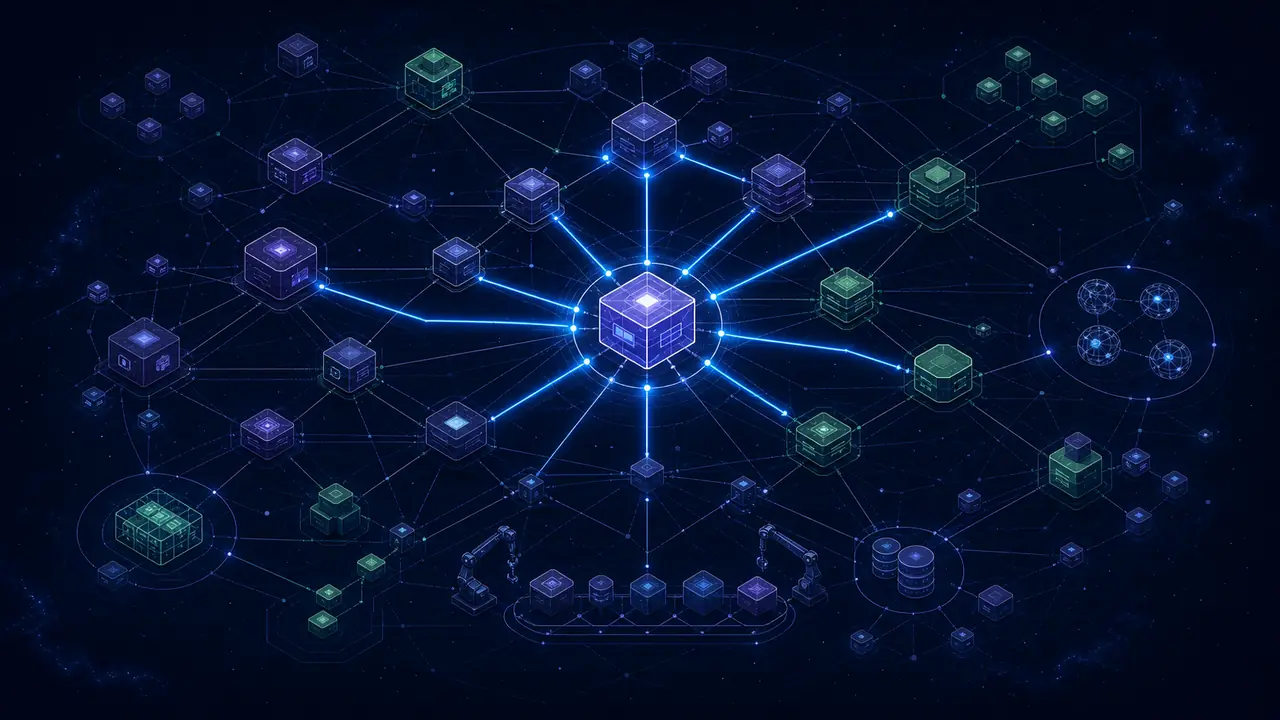
A useful graph brings these relationships into one evidence-backed model. It makes blast radius visible, reveals hidden critical paths, helps teams form migration waves, and connects each technical finding to the people and validation gates required to resolve it. Most importantly, it can be updated as repositories change, so the plan remains connected to the system being modernized.
Why a stack inventory is not enough
Traditional discovery often produces a spreadsheet with repository names, languages, framework versions, and an owner column. That list is useful for scoping, but it treats components as independent rows. Modern systems are networks. A runtime used by twelve services may come from one base image. A framework version may be pinned indirectly by an internal starter kit. A package that appears in only one manifest may be bundled into several artifacts. The difficult work resides in the connections.
Inventory also tends to flatten different kinds of dependency into one field. A compile-time import, a runtime HTTP call, a shared database, an infrastructure module, a required approval, and a production dashboard are all relationships, but they impose different constraints. An import can require an earlier package release. An HTTP call requires contract compatibility. A database creates data ownership and schema sequencing concerns. An approval determines lead time. A dashboard is a prerequisite for safe observation.
Without explicit edges, teams compensate with meetings. Specialists carry architecture knowledge in memory, migration coordinators repeatedly ask who depends on what, and late discoveries force rescheduling. The plan looks complete until a shared component or operational dependency appears. A graph externalizes this knowledge and makes gaps reviewable before they become cutover incidents.
A dependency graph shows what a change can reach, what has to move first, and where validation must prove compatibility.
What a useful modernization graph contains
The graph should represent more than package dependencies. Its nodes can include repositories, workspaces, deployable services, applications, internal packages, third-party packages, runtime versions, build images, pipelines, infrastructure modules, data stores, queues, external APIs, environments, tests, dashboards, teams, and approval groups. Not every program needs every node type, but the model should be able to express the relationships that influence migration decisions.
Edges must be typed and directional. “Service A depends on Package B” implies B may need to become compatible before A. “Service A writes Schema C” is different from “Service D reads Schema C”; together those edges expose an integration path and possible ordering constraint. “Pipeline E deploys Service A” connects a repository change to the delivery mechanism that must support it. “Team F owns Pipeline E” turns a technical prerequisite into an accountable task.
Each node and edge should carry provenance. Record the repository, commit, file or configuration path, line where practical, parser or analysis rule, observation time, and confidence. A connection inferred from a package manifest is different from one inferred from a naming convention. Reviewers need to know why the graph believes a relationship exists and how to correct it when the evidence is incomplete.
Version information is part of topology. A generic edge stating that a service uses a package is insufficient for compatibility analysis. The graph should preserve declared ranges, resolved lockfile versions, workspace links, container digests, runtime pins, and environment-specific overrides. Modernization decisions usually hinge on the resolved state rather than the intention expressed in a manifest.
Core relationship categories
- Build: imports, compilation targets, package managers, generators, and base images.
- Runtime: service calls, events, queues, shared caches, databases, and external APIs.
- Delivery: workflows, deployment templates, infrastructure modules, environments, and approvals.
- Validation: tests, contract suites, performance baselines, probes, dashboards, and alerts.
- Ownership: code owners, service teams, platform groups, security reviewers, and operators.
Build the graph from deterministic evidence
Repository analysis provides a strong starting point. Package manifests describe declared relationships; lockfiles show resolved versions and transitive trees; workspace configuration reveals monorepo boundaries; source imports expose direct code coupling; Dockerfiles identify runtime bases and system libraries; CI workflows show build and test environments; infrastructure definitions identify deployment targets, environment variables, queues, storage, and network relationships.
Ownership files, repository metadata, and deployment configuration add organizational edges. Test configuration reveals which services have unit, integration, contract, or end-to-end coverage. Monitoring definitions and runbooks identify production validation dependencies. These sources should be parsed with versioned rules so the same repository snapshot produces the same facts.
Runtime evidence can enrich the graph, but it needs careful interpretation. Distributed traces, service catalogs, logs, and network observations can reveal relationships that static analysis misses, especially dynamic service discovery or configuration-driven endpoints. Runtime absence, however, does not always mean no dependency; a low-frequency job may not appear during an observation window. Static and runtime evidence should be combined while preserving their origin and confidence.
Human confirmation remains valuable for undocumented constraints. Teams know about vendor deadlines, manual release gates, sensitive traffic cohorts, or operational duties that are not encoded in repositories. Add those facts as explicit reviewed evidence rather than burying them in meeting notes. Record who confirmed the relationship, when it was confirmed, and when it should be reviewed again.
Deterministic discovery should establish the graph’s factual base. AI can summarize a dense neighborhood, suggest related work, or explain why a component is central, but it should not invent edges or decide compatibility. A recommendation remains traceable only when the underlying nodes, relationships, and rules can be inspected independently.
Transitive impact is where modernization scope expands
Direct dependencies are visible and usually assigned first. Transitive impact is harder. An application depends on an internal SDK, which depends on a native package, which depends on a system library absent from the target image. The application’s manifest never mentions the actual blocker. A shallow scan labels it ready; a graph traversal shows the path and the component that should be fixed first.
Transitive impact also crosses relationship types. A runtime change updates a base image. That image changes certificate behavior. Several services call an external API through a shared HTTP client. The operational consequence appears in outbound connectivity and contract probes, not package installation. Multi-layer paths explain why a technically local change can produce a production-wide effect.
The graph should control traversal rather than treating every reachable node as equally affected. Direction, edge semantics, environment, version, and execution path determine relevance. Development-only dependencies should not inflate production blast radius. An optional integration disabled in the target environment deserves a different confidence and severity from an always-on production path. Accurate scope comes from typed relationships and applicability rules.
Path explanations make findings actionable. Instead of stating that “Service A may be affected,” show the chain: runtime target to package rule, package version to internal library, library to repository, repository to service, service to deployment pipeline, and pipeline to cutover gate. The team can then assign the remediation at the correct layer and avoid duplicating work in every consumer.
Dependency topology defines migration sequence
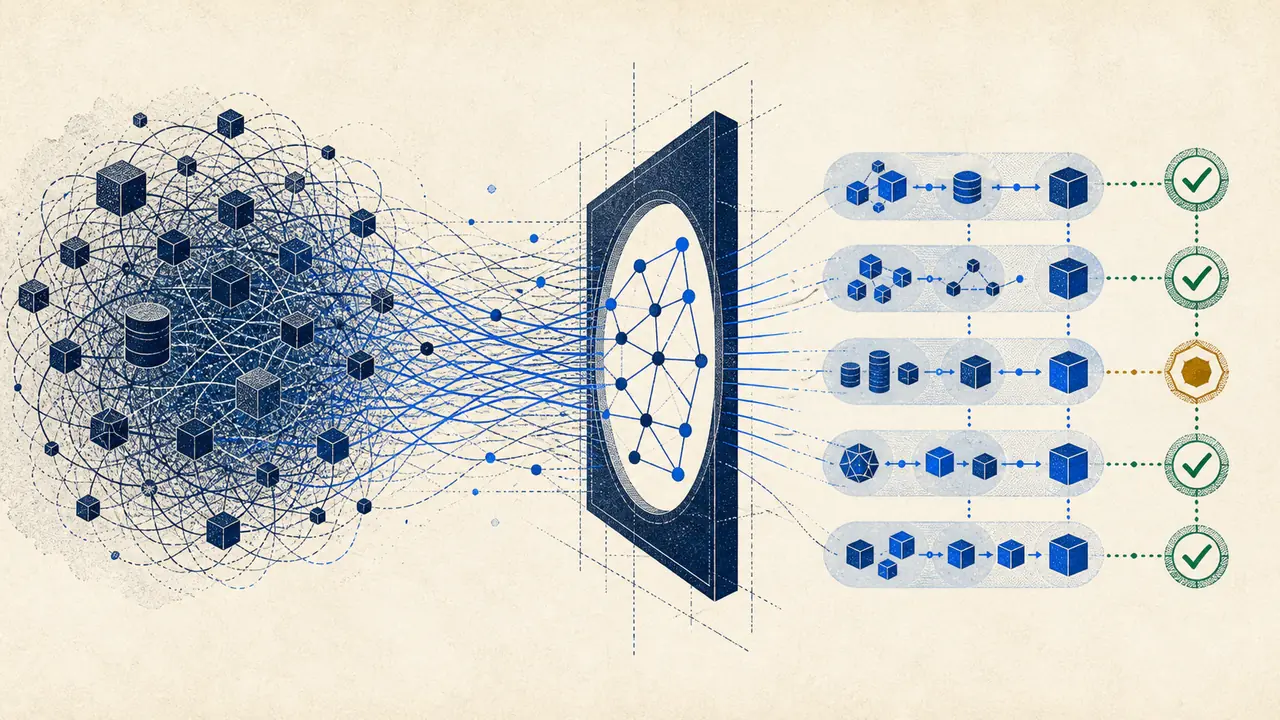
A migration plan is a constrained ordering problem. Nodes that provide shared capabilities generally move before their consumers, unless they can support source and target states simultaneously. Strongly connected components—cycles in which each node depends on another—should be treated as one migration boundary or deliberately separated through compatible contracts. Topological order is a starting point, then risk, ownership, and operational capacity refine the waves.
Centrality can identify high-leverage work. A shared library used by many services may unlock several waves, but its broad reach also raises validation requirements. Betweenness can highlight components that connect otherwise separate system areas. A small integration service may be a more important migration boundary than its code size suggests because many paths pass through it.
Good waves combine dependency correctness with controlled learning. Wave zero establishes baselines, rollback artifacts, and missing tests. Wave one prepares toolchains and shared infrastructure. Wave two updates foundational packages. Early application waves select representative but recoverable services, allowing teams to validate runtime behavior and improve runbooks. Critical services move after their upstream prerequisites and safety evidence are complete.
The graph also prevents false parallelism. Two teams may appear able to work concurrently, but both require a central pipeline update or the same platform specialist. Adding ownership and delivery edges exposes that resource contention. Conversely, independent subgraphs can proceed at the same time without waiting for an arbitrary program-wide milestone.
Repository lists create batches. Typed dependency paths create migration waves with defensible entry conditions and explicit prerequisites.
Connect technical topology to ownership and operations
A modernization graph becomes operational when every actionable node has an accountable owner. Ownership may come from CODEOWNERS, service catalogs, repository teams, infrastructure modules, or reviewed mappings. Conflicts should remain visible. If the repository owner differs from the production service owner, the plan may require both rather than choosing one silently.
Ownership is not only task assignment. It defines who reviews evidence, accepts a risk, executes a deployment, observes production, and authorizes rollback. Those roles can belong to different groups. A clear graph captures the handoff so a technically complete task does not wait at the cutover gate for an unplanned approval.
Operational nodes connect change to service health. A service should link to its dashboards, alerts, synthetic probes, error budget, runbook, and rollback artifact. Missing links are readiness findings. If a team cannot observe a critical behavior under the target runtime, the graph identifies a validation gap before production. If no viable artifact links to rollback, readiness should remain blocked regardless of code compatibility.
Environment-specific topology matters as well. Staging may use a different queue, database mode, identity provider, or traffic profile. A clean test deployment does not prove production readiness when key edges exist only in production. Model those differences so teams know which gates require controlled production evidence and which can be satisfied earlier.
Confidence, freshness, and graph drift
No graph is perfectly complete. Mature migration control makes uncertainty explicit instead of hiding it. Assign confidence based on evidence quality: parsed configuration at a pinned commit can be high confidence; a heuristic source match may be medium; an owner assertion without supporting configuration may require review. Confidence should influence both readiness and the priority of discovery work.
Freshness is equally important. Repositories evolve during a modernization program. Dependencies update, services split, pipelines change, and new workloads appear. Every scan should record its commit set and compare it with the prior snapshot. New nodes, removed relationships, changed versions, resolved blockers, and newly introduced risks should be visible as deltas.
Stale evidence needs policy. A manually confirmed dependency might expire after a defined interval. A runtime trace may be relevant only to the observed release and traffic window. Repository-derived evidence can be recalculated at every commit. By treating freshness as data, the organization can distinguish stable architecture knowledge from assumptions that require renewed review.
Graph quality can be measured operationally. Track unresolved ownership, nodes without deployment relationships, production services without validation links, findings without evidence paths, and edges awaiting confirmation. These are not cosmetic completeness scores. They reveal where the migration plan could fail because the system model lacks an executable connection.
Putting the graph to work
Start with the migration question, not a universal enterprise graph. Define the source and target technology, repositories and environments in scope, and decisions the graph must support. In a Node.js modernization, prioritize runtimes, packages, native modules, images, pipelines, services, tests, and ownership. Expand the model where evidence reveals relevant infrastructure or data relationships.
Create a commit-pinned snapshot and normalize identifiers across sources. The same internal package may appear by registry name, workspace path, artifact name, and repository. Resolve those identities carefully or the graph will fragment one dependency into several nodes. Preserve aliases and provenance so reviewers can understand the normalization.
Apply versioned migration rules to nodes and paths. A rule might flag a native package version under the target runtime, a CI action that cannot select the target version, or a base image using an incompatible operating system library. Produce findings with severity, confidence, evidence, affected paths, and remediation guidance. Link each finding to the tasks and gates it creates.
Review critical paths with engineering owners. Confirm cycles, central packages, production-only relationships, and rollback dependencies. Use the reviewed graph to form waves and identify parallel work. Then rescan as changes merge. A graph earns trust when teams can see why it changed and how those changes alter readiness, effort, and sequence.
Provide several views over the same underlying model. Application teams need the neighborhood around one service, platform teams need shared foundations and pipeline dependencies, and migration leads need cross-wave critical paths. These views should filter evidence rather than create separate diagrams that drift. Exported tasks and reports must retain stable node and finding identifiers so discussions in work-management tools can return to the current source evidence. A graph becomes an operational system when it supports daily decisions without sacrificing the provenance behind them.
Establish change control for manual corrections. Engineers must be able to merge duplicate nodes, correct an owner, mark a relationship as environment-specific, or reject a false inference. Keep the original evidence, reviewer, rationale, scope, and expiry where appropriate. On the next scan, reapply the correction only while its conditions remain true. This approach combines automation with accountable system knowledge and prevents a convenient override from concealing later repository drift.
Graph review checklist
- Repository and environment scope is explicit and commit-pinned.
- Nodes cover code, runtime, delivery, validation, operations, and ownership.
- Edges are typed, directional, version-aware, and traceable to evidence.
- Transitive paths distinguish production, development, and optional impact.
- Cycles are grouped or separated with a documented compatibility boundary.
- Central dependencies have stronger validation and accountable owners.
- Production services link to health signals and rollback artifacts.
- Uncertain and stale relationships are visible for review.
- Rescans produce explainable graph and readiness deltas.
Conclusion
Software modernization is not a collection of independent version edits. It is coordinated change across a network of code, services, data, delivery systems, validation controls, and teams. An inventory establishes the starting set; a typed, evidence-backed dependency graph reveals the paths through which change propagates.
That graph makes practical decisions possible. Teams can locate shared blockers, select independent boundaries, expose cycles, sequence migration waves, allocate ownership, and attach validation and rollback to the right components. With confidence, provenance, and continuous rescanning, it remains a live control surface rather than a diagram that becomes obsolete after discovery.
See the full migration path.
CutoverGrid maps cross-repository impact, traces every finding to evidence, and converts dependency topology into owned migration waves and cutover gates.