Large migrations fail in the space between analysis and execution. Teams may know which runtime is outdated, which framework must change, and which dependencies are incompatible, yet still lack a safe order for the work. A list of findings does not express prerequisites. A spreadsheet grouped by team does not describe system coupling. A target date does not prove that a production cutover is ready.
Migration waves solve this translation problem. They organize related changes into a controlled sequence in which each unit creates evidence and unlocks the next. Well-designed waves reduce blast radius, make ownership clear, expose critical paths, and allow estimates to improve as the organization learns. Poorly designed waves simply rename batches and preserve the same hidden dependencies.
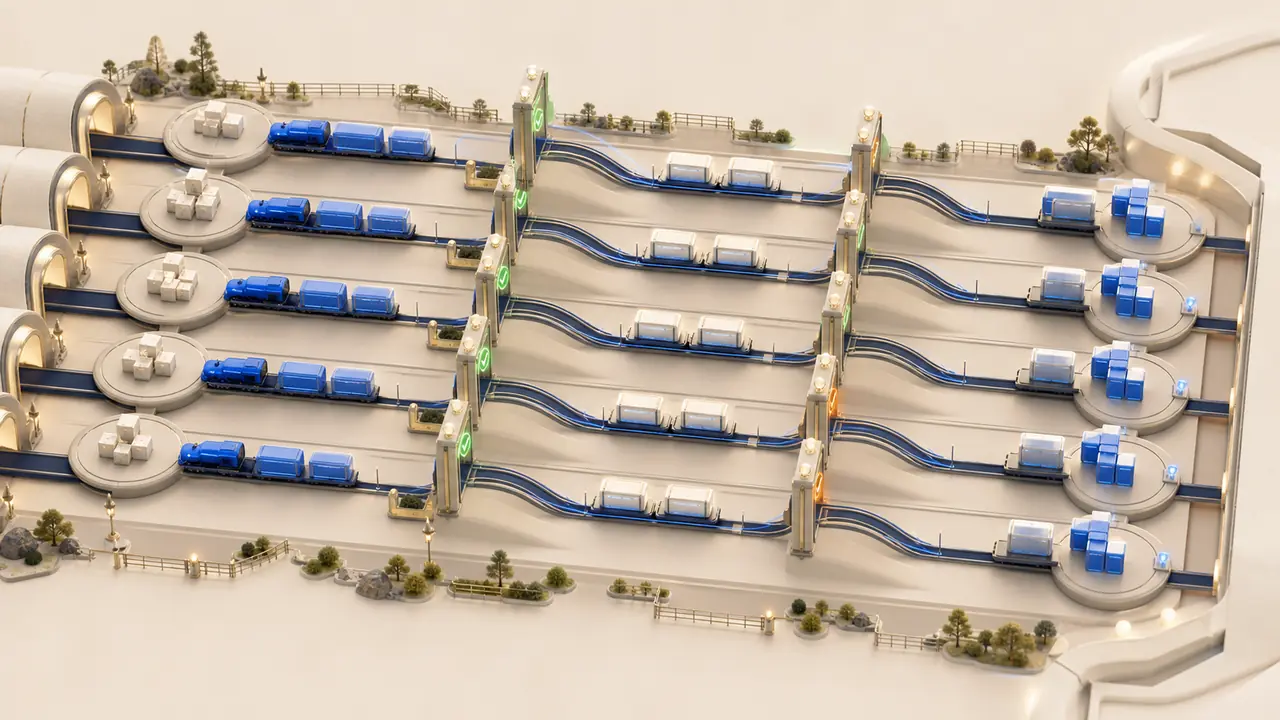
This guide explains how to build waves from repository and operational evidence, how to define boundaries, what a reusable wave pattern looks like, and how to keep the plan current while normal engineering work continues.
What a migration wave really is
A wave is a set of changes that can enter execution together because its prerequisites are satisfied and can exit together because its acceptance criteria are verifiable. It has an objective, scope, dependency set, accountable owners, effort range, risks, assumptions, validation gates, rollback conditions, and observation window. The next wave depends on evidence produced by the current one, not merely the passage of time.
This definition distinguishes a wave from a calendar sprint. A sprint limits time and supports delivery cadence. A wave limits migration state and supports technical control. Work from several waves can sometimes occur in one sprint, and one wave can span several sprints. The relationship depends on dependencies and team capacity.
A wave is also different from a project phase. “Development,” “testing,” and “deployment” are activity categories. A migration wave should contain the development, testing, and deployment needed to prove a bounded result. Separating testing into a late program phase delays evidence and allows incompatible assumptions to compound.
The best wave boundaries are independently observable and recoverable. A shared package release, a group of stateless services, a traffic cohort, or one region can form a useful boundary if teams can determine whether it succeeded and reverse it without restoring the entire estate. Where no such boundary exists, the plan should explicitly group the coupled components or create compatibility work that makes separation possible.
Merged code is an intermediate state. Exit requires the agreed builds, tests, runtime signals, documentation, rollback readiness, and approvals.
Collect evidence before sequencing
Begin with a commit-pinned inventory of repositories, workspaces, services, packages, runtimes, frameworks, lockfiles, native dependencies, container images, CI workflows, infrastructure configuration, tests, environments, and owners. Pinning prevents a subtle planning error: assigning tasks from one repository state while teams execute against another.
Build a typed dependency graph. Direct and transitive package relationships matter, but so do service calls, events, shared data stores, deployment templates, infrastructure modules, release approvals, monitoring, and rollback artifacts. Direction and relationship type establish potential order. A shared library must often move before consumers; a backward-compatible API provider can sometimes move independently; two services sharing an irreversible schema assumption may need to move together.
Turn analysis into findings with evidence. Each blocker or risk should identify the affected component, repository, commit, file or configuration path, relevant version, rule, confidence, and recommended action. Manual-review items should remain distinct from deterministic incompatibilities. This makes discovery work visible rather than allowing uncertainty to hide inside estimates.
Establish a readiness baseline across dependency, code, test, infrastructure, delivery, operations, ownership, documentation, and rollback dimensions. A single percentage can summarize direction, but the dimensions explain what blocks execution. A service with compatible code but no contract tests or rollback artifact is not ready for an early production wave.
Finally, understand capacity. Record team ownership, release windows, specialist bottlenecks, vendor dependencies, freeze periods, and concurrent product commitments. Technical order is necessary but insufficient; the sequence must also be operable by the people who own the change.
Choose boundaries from dependency topology
Start by identifying strongly connected components. When several nodes form a dependency cycle, moving one independently may be impossible. Teams can group the cycle into one wave, introduce a versioned contract or adapter that breaks the cycle, or redesign the relationship before migration. Ignoring the cycle produces a sequence that cannot satisfy its own entry conditions.
Next, find foundational nodes with many consumers: base images, shared libraries, build templates, infrastructure modules, and internal SDKs. These often belong in preparation waves because downstream progress depends on them. Their wide reach also increases validation requirements. A central package should be proven in representative consumers before the entire estate adopts it.
Identify independent subgraphs. Services with isolated data, stable contracts, separate deployments, and clear ownership can move concurrently. This is genuine parallelism. Grouping unrelated repositories into one wave because the same department owns them creates correlated scheduling without technical benefit.
Use risk to refine order. Early application waves should be representative enough to test important assumptions but recoverable enough to limit impact. A completely trivial service teaches little. The most critical service creates unnecessary exposure. Choose workloads that exercise the relevant framework, dependencies, deployment path, and observability while offering reliable rollback.
Keep wave size bounded. A wave should be small enough that owners can review its evidence and operators can understand its state. If the number of tasks or services makes a go or no-go discussion vague, split the wave at an observable boundary. If splitting creates extensive compatibility work with no reduction in blast radius, keep the coupled group together and strengthen the controls.
A practical seven-wave pattern
Wave 0: Establish the safety baseline
Before changing the target technology, capture current builds, tests, performance, operational signals, deployment behavior, and rollback timing. Add missing contract probes, dashboards, ownership, or artifact retention required to evaluate later waves. Wave zero turns unknown safety assumptions into explicit controls.
Wave 1: Prepare the toolchain
Update CI runners, runtime setup, package managers, compilers, test frameworks, linters, container build stages, base images, and deployment templates so they support the target state. Where source and target states must coexist, prove the matrix and define when dual support will end.
Wave 2: Upgrade shared foundations
Move internal packages, SDKs, common middleware, generated clients, infrastructure modules, and service templates that unlock consumers. Publish compatible versions, validate representative usage, document adoption rules, and avoid forcing all dependents to change before the shared component is proven.
Wave 3: Migrate low-risk, representative services
Select independently deployable services that exercise meaningful runtime behavior. Complete target builds, deployment, production observation, and rollback rehearsal. Use outcomes to calibrate effort estimates, compatibility rules, runbooks, and performance thresholds.
Wave 4: Migrate critical services
Move high-impact workloads only after their prerequisites and safety controls have been validated. Use stronger approvals, longer observation, controlled traffic, and precise stop conditions. Validate service contracts, data behavior, capacity, alerting, and on-call readiness.
Wave 5: Complete production cutover
Remove remaining source-runtime traffic, verify organization-wide gates, confirm rollback availability for the defined window, and communicate the operational state. The cutover is a governed decision supported by evidence from earlier waves, not merely the last deployment command.
Wave 6: Clean up and learn
Remove compatibility layers, obsolete flags, source images, old workflow paths, temporary dashboards, duplicated tests, and unused dependencies after rollback obligations end. Compare predicted and actual effort, blockers, incident signals, and sequence. Feed those outcomes into future migration rules.
Define entry, exit, and stop conditions
Entry criteria protect a wave from starting on assumptions. Typical criteria include completion of upstream package releases, target-capable pipelines, assigned ownership, resolved blockers, available test environments, approved runbooks, and verified rollback artifacts. Write criteria as observable states. “Platform ready” is ambiguous; “base image digest approved, target matrix passing, and deployment template version adopted” can be checked.
Exit criteria prove the wave’s objective. Include merged changes, successful builds, unit and integration results, contract verification, performance thresholds, production health, documentation, ownership updates, and an observation period appropriate to the workload. Long-running jobs or infrequent traffic may require evidence beyond an immediate post-deploy check.
Stop conditions govern active exposure. Define error-rate, latency, saturation, queue lag, business-signal, or correctness thresholds that pause rollout. Assign who watches each signal and who has authority to stop. Do not make rollback dependent on consensus during an incident; decide authority before cutover.
Rollback conditions should identify when reversal remains safer than forward repair. Include the last reversible point for schemas and messages, artifact availability, configuration compatibility, required permissions, and expected restoration time. If a wave cannot roll back independently, its boundary may be wrong or it needs a deliberate forward-recovery plan.
Plan ownership, handoffs, and capacity
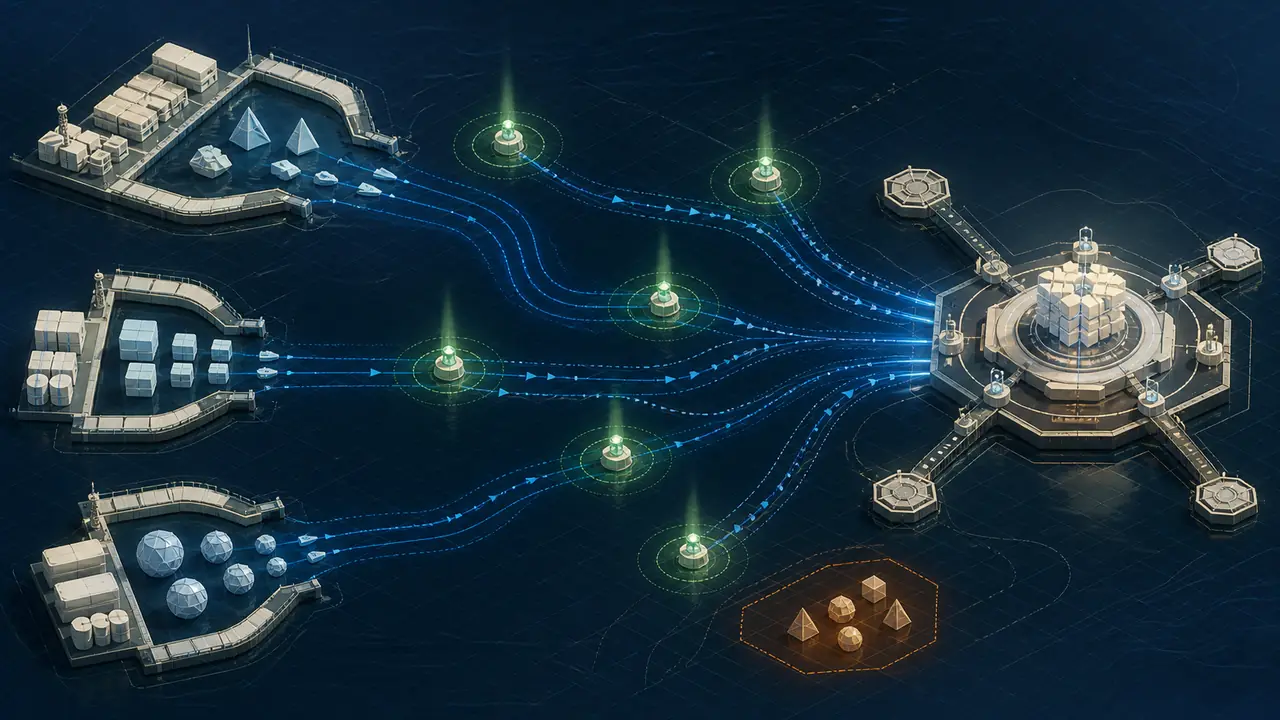
Every wave needs one accountable lead, but execution is usually distributed. Assign owners to code remediation, shared packages, pipelines, infrastructure, validation, operations, security review, communications, and approval. Link ownership to the evidence source so teams know exactly what they must review.
Model handoffs as dependencies. A platform team publishing a base image does not complete the outcome until service teams adopt it. An application team completing code changes does not unlock production when a central release group still needs an unplanned approval. Treat these transitions as tasks with acceptance criteria rather than invisible coordination.
Estimate in ranges and state assumptions. Migration work contains discovery uncertainty, especially around native modules, production-only jobs, and weak tests. A range communicates this honestly. Record exclusions and the unknowns that could change it. Update the range after early waves provide actual effort and defect data.
Watch specialist constraints. One database engineer, security reviewer, or platform operator can sit on the critical path for multiple waves. Parallel technical work does not create parallel throughput when it converges on the same person. Sequence reviews and rehearsals as carefully as code changes.
Protect normal operations. Teams still handle incidents, product releases, and maintenance during a migration. Include on-call load, freeze windows, and recovery time in capacity planning. A schedule that assumes uninterrupted focus transfers planning risk into production.
Use every wave to improve the next
Early waves should answer explicit questions. Does the target runtime change memory usage? Do native modules use prebuilt artifacts on the production architecture? Are contract suites representative? Does rollback finish within the recovery objective? Recording the question makes wave selection purposeful and ensures observations update the plan.
Compare estimated and actual effort by task category. A total variance number is less useful than knowing dependency remediation was predictable while test stabilization was not. Compare predicted blockers with observed issues. Update compatibility rules, default assumptions, and confidence for remaining components that share the same pattern.
Rescan repository and configuration state after merges. Mark resolved findings, introduce new ones, recompute affected paths, and detect scope changes. A plan based on a month-old lockfile can be wrong even when execution appears on schedule. Readiness should move because evidence changed, with an explanation for each material delta.
Hold a wave review before advancing. Confirm exit evidence, unresolved risks, production observations, rollback status, and changes to future waves. This is not a broad status meeting. It is a decision checkpoint using a shared evidence set.
Common wave-planning mistakes
Grouping by organization chart. Team boundaries are relevant to ownership but do not replace technical dependencies. Services owned by one team may rely on foundations controlled elsewhere.
Starting with application repositories. If pipelines, images, or shared packages do not support the target, application teams repeat work and wait. Move enabling foundations first.
Calling every batch a wave. A list without entry criteria, exit evidence, validation, observation, and rollback is only a batch.
Deferring production evidence. Completing all code changes before operating any representative target workload postpones the most valuable learning until exposure is greatest.
Ignoring cleanup. Compatibility layers and temporary flags become permanent architecture unless removal is an owned wave with gates tied to the rollback window.
Freezing the plan. New commits and operational findings change dependencies and confidence. A rigid sequence can become less safe while reporting progress against obsolete assumptions.
Represent decisions, not just status
Wave dashboards should separate execution progress from readiness. A team can complete most planned tasks while one unresolved shared blocker prevents safe entry. Conversely, a small number of high-leverage tasks may unlock a large group of services. Show prerequisite state, open findings by severity, evidence confidence, remaining effort range, gate status, and the reason for movement. Percent complete alone encourages teams to optimize task closure instead of technical outcomes.
Record exceptions as bounded decisions. An accepted risk needs an approver, affected scope, rationale, compensating control, expiry, and reopening condition. It should travel with the wave and appear at cutover review. Treating an exception as task completion removes exactly the context operators need. When a rescan changes the affected version or introduces a new consumer, the exception should return for review rather than expanding silently.
Maintain a decision log for boundary and sequence changes. If a service moves from wave three to wave four, state whether the cause was a new dependency, missing validation, owner capacity, or operational risk. This history prevents repeated debate and provides useful calibration after the program. It also helps leaders distinguish genuine evidence-driven replanning from unmanaged schedule movement.
Use a common readiness vocabulary across waves. “Ready,” “blocked,” “at risk,” and “pending” should have defined meanings and required evidence. Teams can retain local implementation practices while sharing cutover semantics. This avoids a review in which one group treats merged code as complete and another requires production observation. Common status rules also make cross-wave dependencies easier to automate: an upstream capability unlocks downstream work only when its defined exit state has been reached.
Migration wave planning playbook
- Pin repositories, workflows, images, and infrastructure to a reproducible snapshot.
- Map technical, delivery, operational, and ownership dependencies.
- Classify blockers, risks, manual reviews, and unknowns with evidence.
- Group cycles or create compatibility boundaries that break them.
- Move toolchains and shared foundations before dependent applications.
- Select early services for both representativeness and recoverability.
- Give every wave an objective, scope, owners, effort range, and assumptions.
- Write measurable entry, exit, stop, observation, and rollback conditions.
- Model approvals and specialist capacity as real dependencies.
- Compare estimated and observed outcomes after every wave.
- Rescan continuously and explain changes to readiness and sequence.
- Close with cleanup, evidence retention, and reusable learning.
Conclusion
Migration waves make complex engineering change manageable by creating bounded decisions. They connect technical topology to ownership, capacity, validation, production observation, and rollback. Their sequence should follow evidence: establish safety, enable the toolchain, move shared foundations, learn from recoverable services, protect critical workloads, govern cutover, and remove temporary structures.
The quality of a wave is measured by what it proves. When each wave has explicit prerequisites and produces evidence that unlocks the next, teams can adapt without losing control. Continuous rescanning keeps that sequence aligned with current repositories, and outcome review turns one modernization program into better intelligence for the next.
Build migration waves your teams can execute.
CutoverGrid turns cross-repository findings into sequenced work with owners, dependencies, acceptance criteria, validation gates, and rollback conditions.