Extract
Read manifests, imports, workspaces, deployment files, infrastructure, and pipeline configuration.
Delivered capability · 03
A connected model of services, packages, data, infrastructure, delivery paths, environments, and accountable teams.
Capability overview
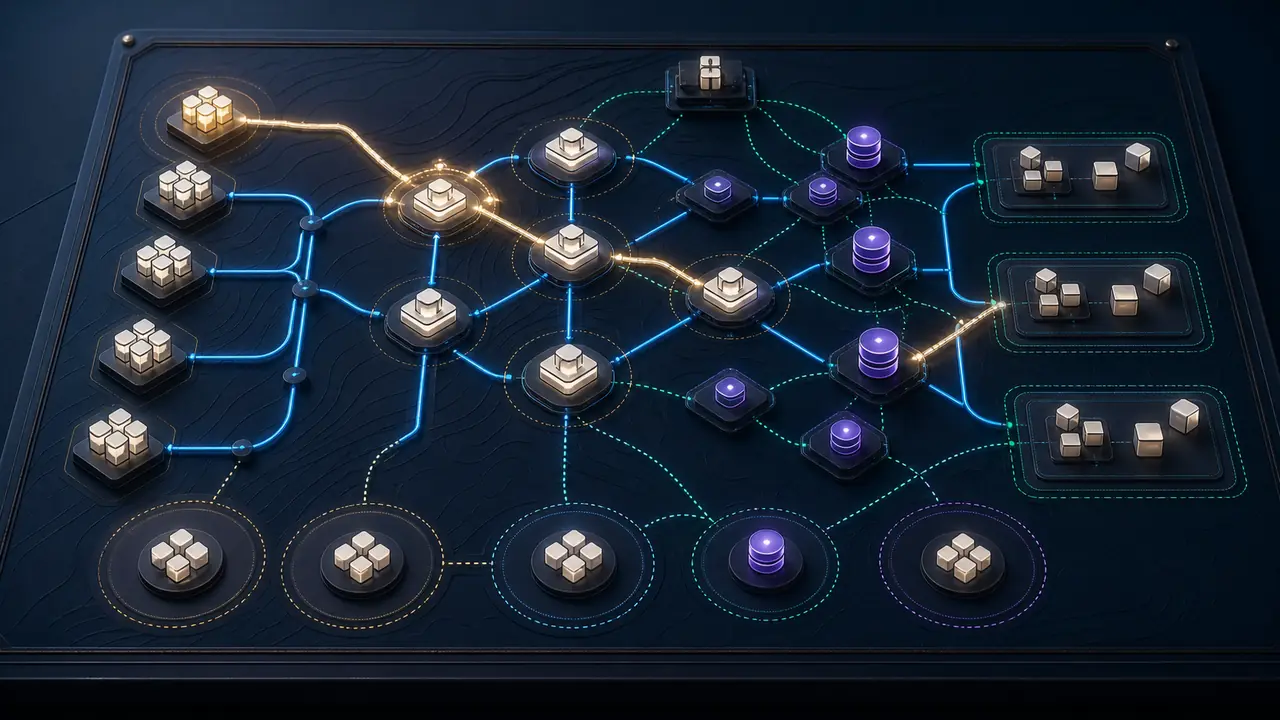
Repository lists describe storage boundaries, not operational architecture. CutoverGrid builds an impact graph that connects deployable applications, shared packages, APIs, databases, queues, CI pipelines, infrastructure modules, environments, and owning teams. Relationships are derived from repository evidence and deployment configuration, then preserved with confidence and provenance so engineers can verify why two components are connected.
The graph makes migration propagation visible. A runtime change in a shared package can be followed through its consumers; a database upgrade can be traced to services, jobs, tests, and rollout controls; a pipeline change can be mapped to every artifact it builds. Direct dependencies, indirect dependencies, shared infrastructure, and organizational ownership remain distinct so teams can prioritize the relationships that change sequence or cutover risk.
How it works
Read manifests, imports, workspaces, deployment files, infrastructure, and pipeline configuration.
Normalize components and connect relationships across repository boundaries.
Add environment, criticality, ownership, and operational context.
Use the graph to calculate blast radius, sequencing constraints, and shared blockers.
Evidence produced
The capability produces structured evidence that can be reviewed by engineers and reused by downstream planning and verification.
Deployables, packages, data stores, queues, pipelines, and environments.
The manifest, import, configuration, or deployment reference behind each edge.
Direct and transitive routes from a proposed change to affected systems.
Responsible teams, reviewers, and operational escalation boundaries.
Operational impact
Cross-repository maps expose work that would otherwise surface late during integration or cutover. Platform teams can coordinate shared foundations first, service owners receive the right dependencies, and leaders see why a change that looks local can require a multi-team migration program.
See it in a migration assessmentMigration control in practice
Start with the repositories, define the target transition, and see the technical and operational work required.