Baseline
Resolve current runtime, compiler, package manager, image, and deployment state.
Delivered capability · 04
Deep runtime modernization analysis across application code, dependencies, native modules, delivery infrastructure, and validation.
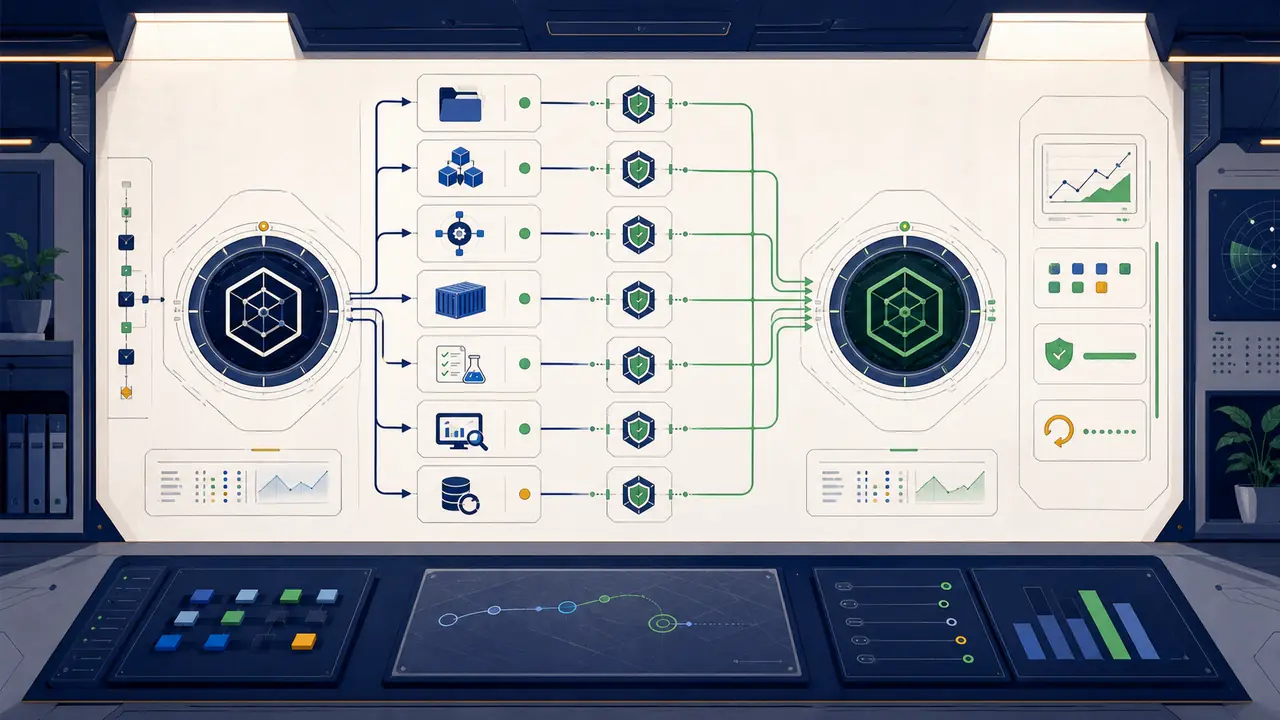
Capability overview
CutoverGrid evaluates Node.js and TypeScript migrations as system changes rather than version edits. It analyzes engine declarations, version-manager files, manifests, lockfiles, workspace boundaries, module formats, compiler settings, native dependencies, base images, CI actions, build tools, tests, observability agents, and deployment targets. Each rule is evaluated against the exact source and target transition selected by the team.
The analysis distinguishes hard blockers, probable compatibility risk, environment-specific exposure, and missing evidence. Native modules are evaluated against ABI strategy, prebuilt binary availability, operating system, architecture, and fallback compilation. TypeScript and module-system checks connect compiler output to the runtime and packaging behavior that production will execute. Findings include remediation context and the validation required to close them.
How it works
Resolve current runtime, compiler, package manager, image, and deployment state.
Apply versioned compatibility rules to code, dependencies, and configuration.
Identify build, test, performance, and observability evidence required for confidence.
Group remediation into shared foundations and service migration waves.
Evidence produced
The capability produces structured evidence that can be reviewed by engineers and reused by downstream planning and verification.
Engines, version files, images, actions, and platform configuration.
Resolved versions, transitive paths, native modules, and support conditions.
Removed APIs, stricter behavior, modules, compilation, and packaging assumptions.
Build matrices, tests, artifacts, monitoring, and rollback controls.
Operational impact
Teams receive one coherent view of runtime readiness instead of separate dependency, CI, container, and test checklists. The result is a plan that connects each compatibility issue to the service, owner, remediation task, and production gate it affects.
See it in a migration assessmentMigration control in practice
Start with the repositories, define the target transition, and see the technical and operational work required.