Select
Choose a finding with a supported remediation pattern and current source revision.
Active initiative · 05
Grounding assisted remediation in deterministic findings, controlled code changes, and human-reviewed verification.
Capability overview
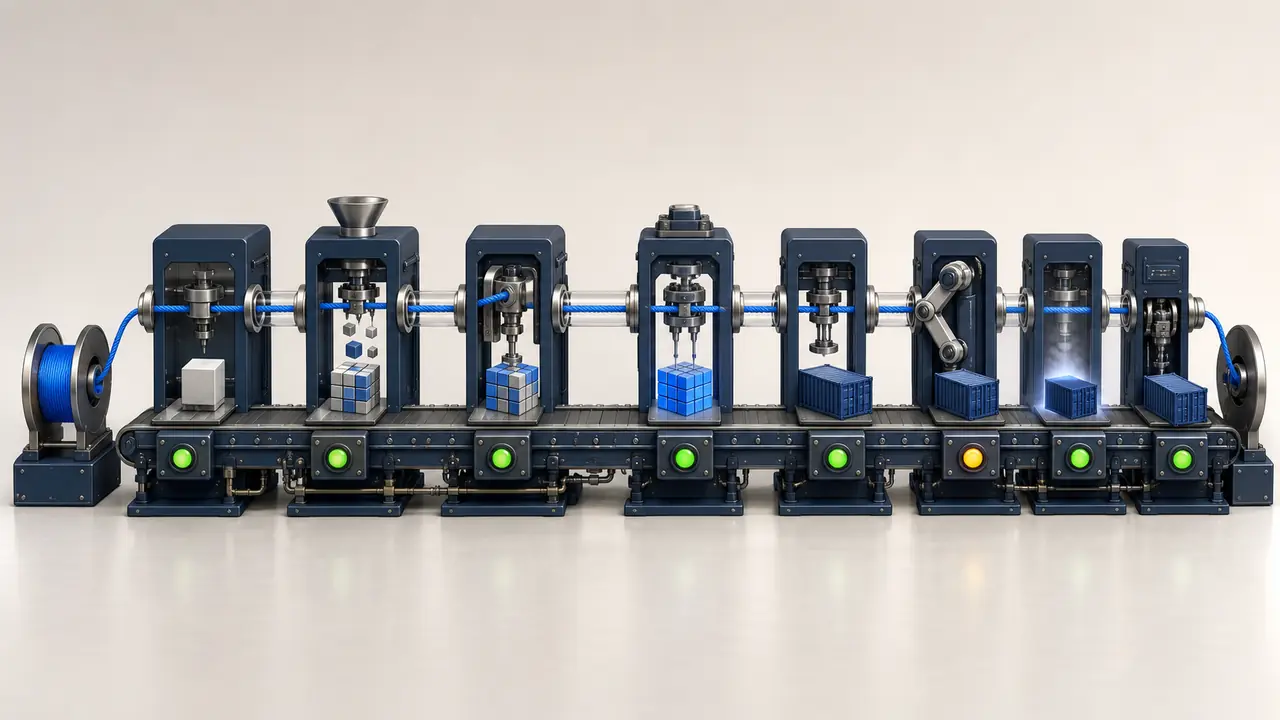
We are connecting migration findings to assisted patch workflows that preserve the evidence behind the proposed change. A patch begins from a specific rule, source revision, file location, target transition, and acceptance condition. The system can prepare a bounded change and explanation, but it does not bypass normal repository review, ownership, branch protection, or delivery controls.
Validation is part of the patch object, not a later manual step. CutoverGrid records the tests, builds, static checks, package operations, artifact verification, performance thresholds, and service-level smoke checks required by the original finding. A merged pull request only resolves the finding when the expected target state and required validation evidence are both present.
How it works
Choose a finding with a supported remediation pattern and current source revision.
Generate a bounded patch, explanation, assumptions, and expected target state.
Open the change through approved source-control workflow and responsible owners.
Run deterministic checks and close the finding only when acceptance evidence passes.
Evidence produced
The capability produces structured evidence that can be reviewed by engineers and reused by downstream planning and verification.
Rule, repository, commit, file, observed value, and affected service.
Proposed diff, rationale, assumptions, exclusions, and expected state.
Branch, pull request, reviewers, approvals, requested changes, and final commit.
Builds, tests, artifacts, environments, results, and remaining risk.
Operational impact
Connecting patches to validation reduces repetitive migration work without creating unreviewed automation. Engineers can evaluate a precise proposal in context, and migration leaders see whether a blocker is genuinely resolved rather than merely associated with a closed pull request.
See it in a migration assessmentMigration control in practice
Start with the repositories, define the target transition, and see the technical and operational work required.